







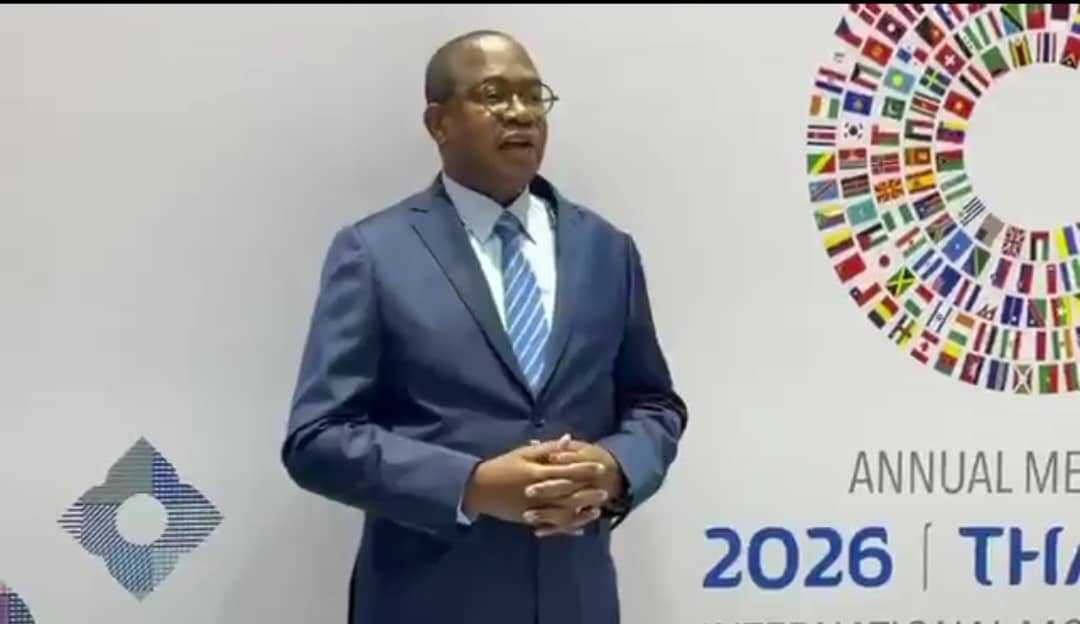
Finance Minister Mthuli Ncube has defended Zimbabwe’s economic recovery at the 2026 IMF-World Bank Group Annual Meetings in Bangkok, pointing to lower inflation, exchange-rate stability and stronger growth, although International Monetary Fund projections and the country’s debt position show that stabilisation has yet to resolve deeper economic constraints.
Ncube, who is representing Zimbabwe at the meetings at the Queen Sirikit National Convention Centre in Thailand, said the economy had accelerated in 2025 on the back of mining, strong commodity prices and agriculture, with the momentum continuing into 2026.
“Resilience. Recovery. Stability,” he said, arguing that “thanks to fiscal and monetary discipline, we now have price and exchange rate stability, with local currency inflation significantly down in the first half of 2026.”
He added: “Even the IMF has recognised it: Zimbabwe is stabilising, inflation is low, and the current account is robust. We are on the right path.”
The IMF’s latest assessments broadly support the stabilisation argument. In its September 17, 2026, review of Zimbabwe’s Staff-Monitored Programme, the Fund said the economy grew by 8.3% in 2025 and is projected to expand by 5% in 2026. It also reported that annual inflation had fallen to 2.9% in August, supported by tight monetary conditions and relative exchange-rate stability.
However, the same assessment projects growth slowing to 3.5% in 2027, partly because of the anticipated effects of a strong El Niño weather event. The Fund warned that the outlook remains vulnerable if the weather shock is more severe than expected or planned mitigation measures are delayed.
The projections suggest that while Zimbabwe has regained some macroeconomic stability, sustaining the recovery will depend on agricultural performance, mining output and the Government’s ability to manage external shocks.
Related Stories
Inflation figures also illustrate the progress and the remaining challenges. Reserve Bank of Zimbabwe statistics show that annual inflation measured in the local currency stood at 3.7% in September 2026, while annual US dollar inflation was 3.46%. Monthly inflation was 0.54% in ZiG terms and 0.28% in US dollars.
These figures indicate that price increases have moderated considerably, but lower inflation does not mean that prices have returned to previous levels or that household incomes have recovered. The broader test is whether greater price stability translates into improved purchasing power, predictable business costs, higher investment and job creation.
The external position has also provided support. The IMF expects Zimbabwe’s current account to remain in surplus in 2026, reflecting export receipts and remittance inflows. A surplus can help support foreign currency availability and reserves, although it does not automatically translate into increased domestic production or easier access to finance for businesses.
The Government’s debt position remains a major obstacle to a more durable recovery. The IMF’s earlier 2026 programme report estimated public and publicly guaranteed debt at US$22.8 billion at the end of 2025, equivalent to 43.8% of gross domestic product. External arrears to official creditors were estimated at US$7.7 billion. The Fund assessed the country’s debt as being in distress and unsustainable.
Clearing arrears and restoring debt sustainability remain central to Zimbabwe’s efforts to re-engage with international creditors and eventually unlock more external financing. The IMF has stressed that sustained programme implementation, debt-data reconciliation and continued engagement with creditors are necessary to advance that process.
There are also questions about how fiscal discipline is translating into public services. In its September review, the IMF reported that Zimbabwe had met its quantitative and indicative programme targets through June, except for the target on protected social and priority spending.
The Fund said the shortfall highlighted the need to improve cash planning and budget execution to ensure that approved resources reach vulnerable households and priority programmes on time.






Leave Comments